
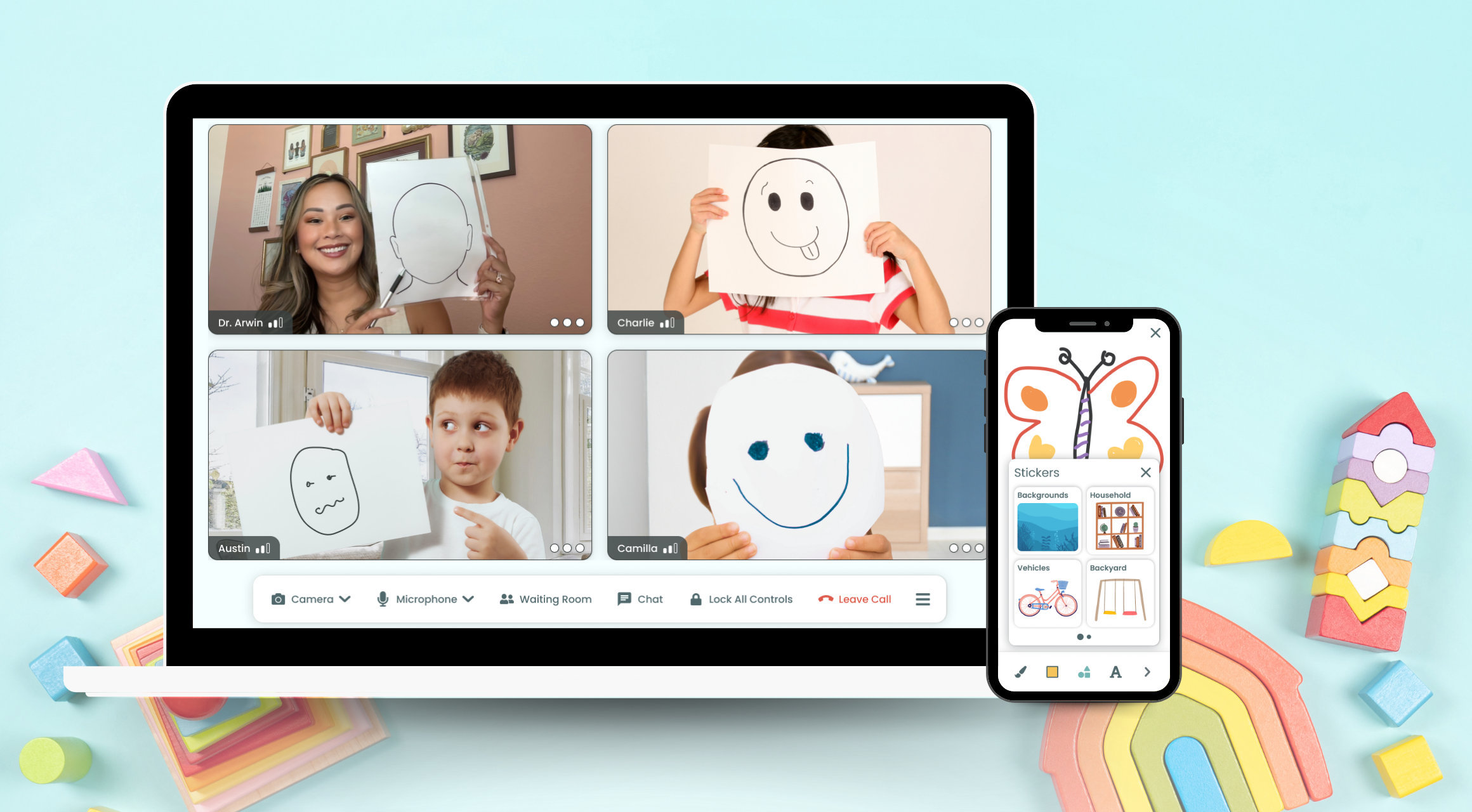
Kismet Health is a telehealth platform focused on strengthening communication and collaboration between clinicians and patients. During my time there, I worked across multiple product surfaces including the clinician dashboard, patient waiting room, video calling experience, AI-based support tools, and collaborative whiteboard-style interaction tools.
I owned end-to-end UX and UI design across several core product experiences, helping the platform move from early MVP functionality to a more scalable, accessible, and market-ready solution.
My work included:
I created a scalable, accessibility-first design system and mobile-responsive experience that boosted engagement and streamlined feature development.
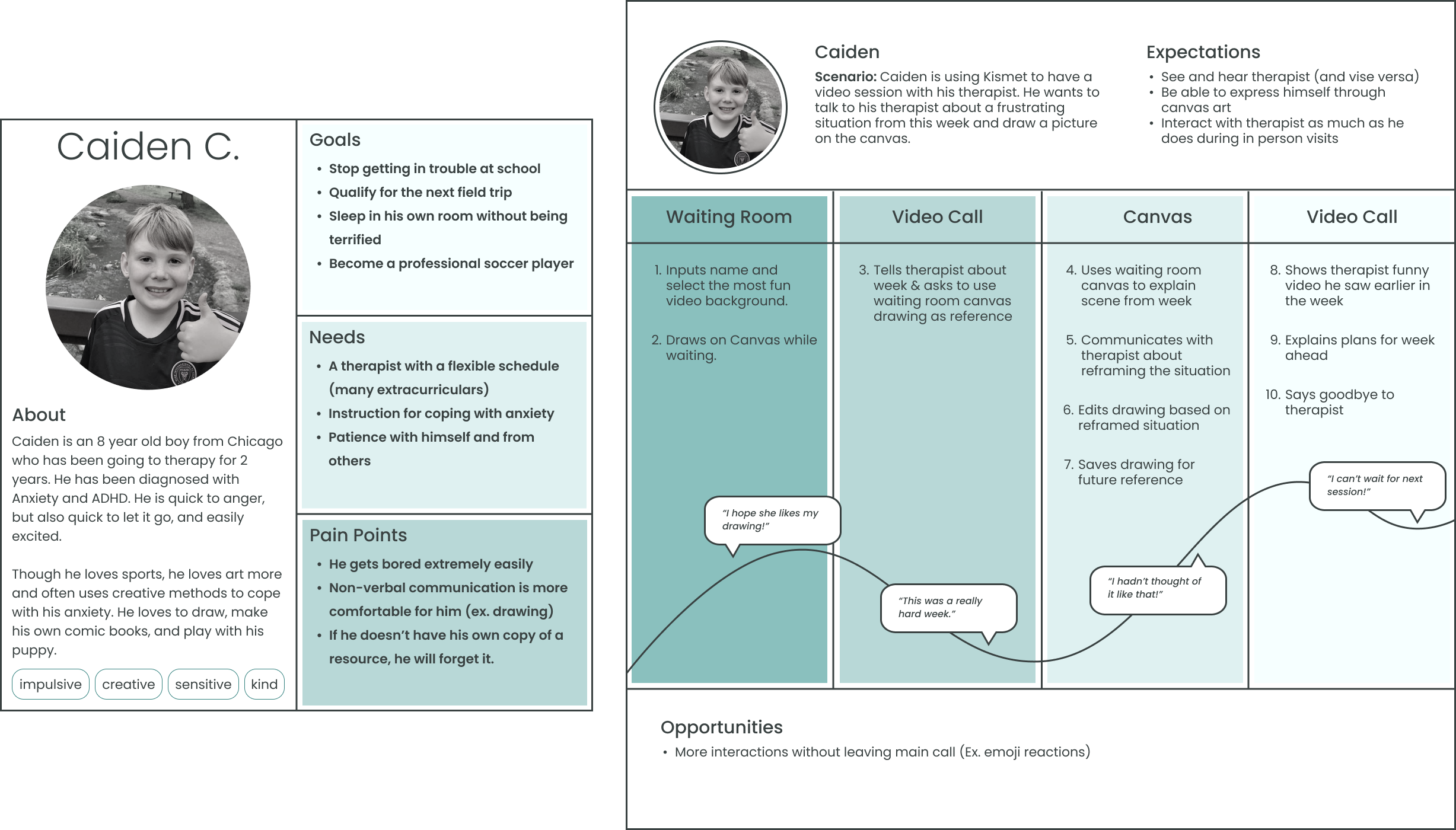
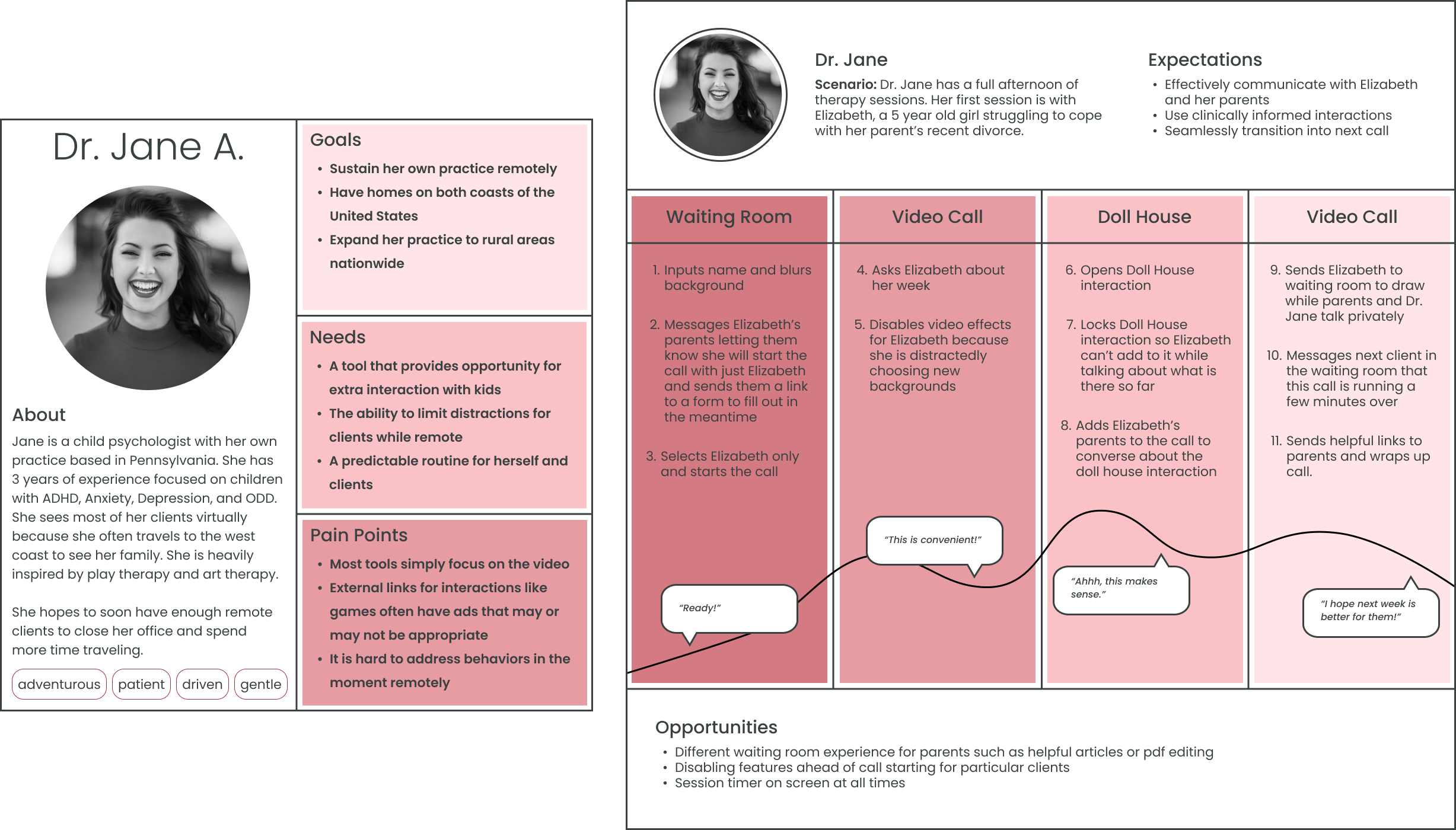
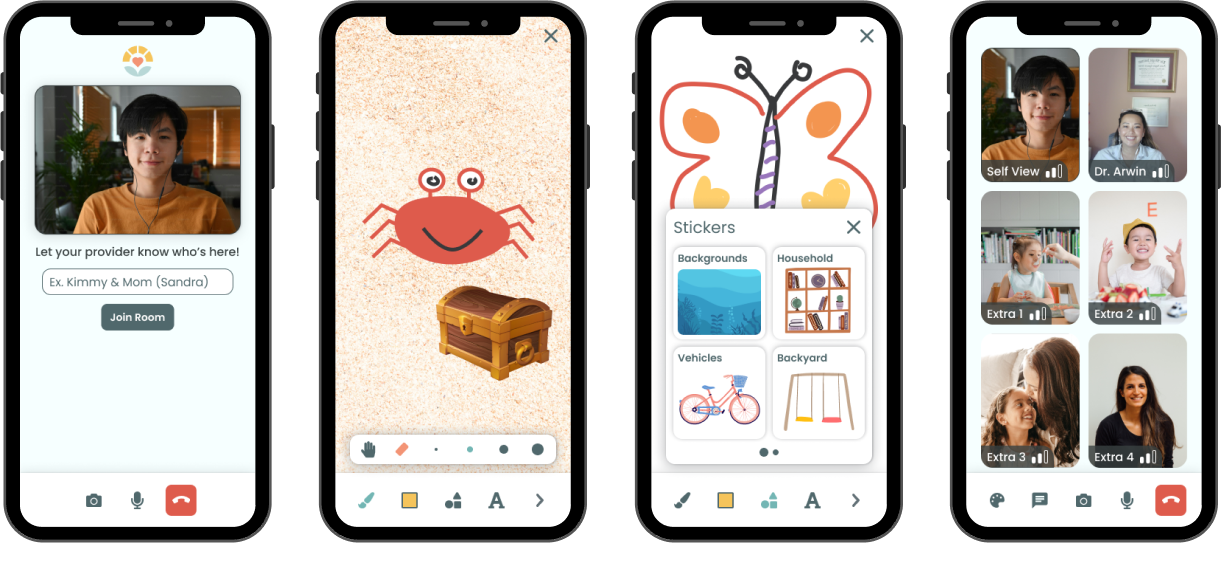
I focused on two persona types: the Client (Caiden) and the Provider (Dr. Jane).
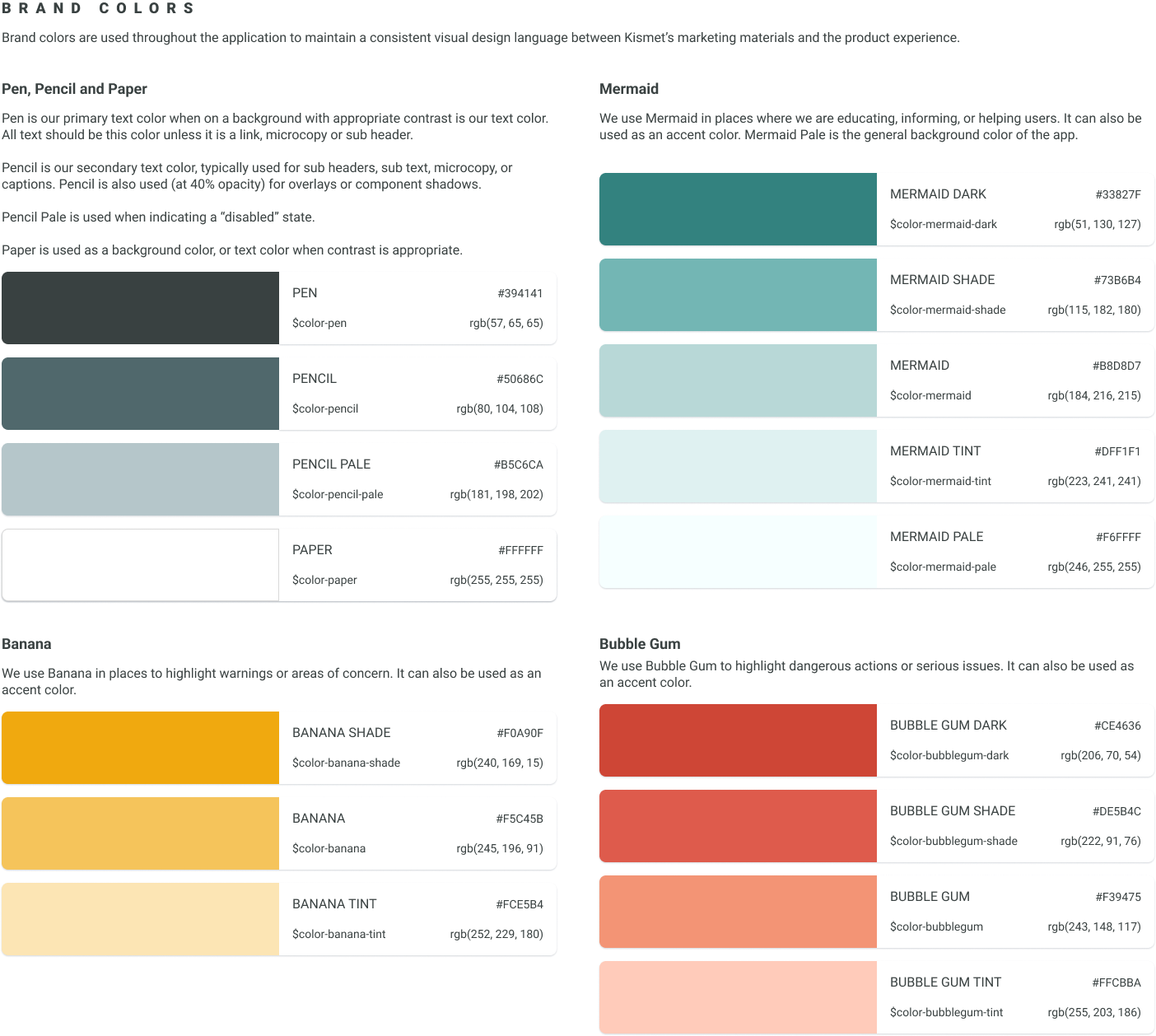
The design system included brand guidelines, reusable layouts, accessibility guides, and a custom-made component library.
Through early research it was determined most of the "Client" users would be on their phone and that the platform needed to be responsive on the client's side.
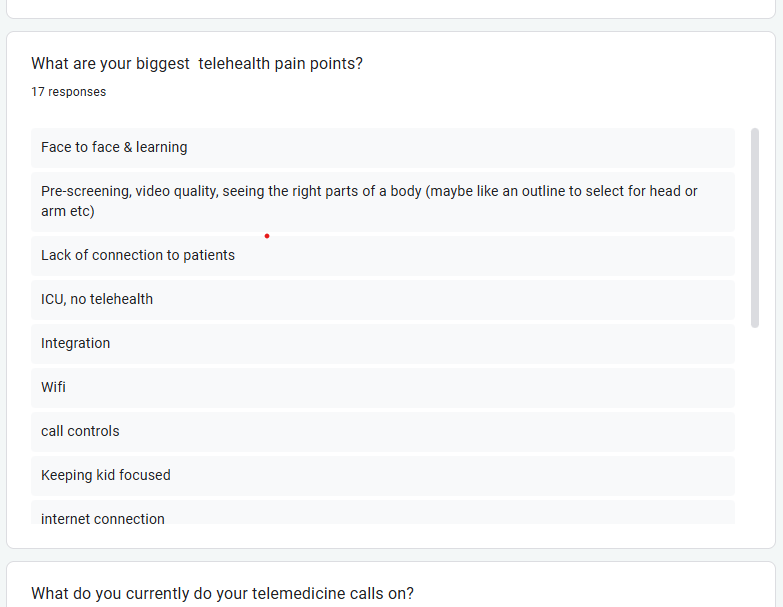
There were multiple occasions of in-person and remote interviews and surveys with prospective users about their current experiences with telehealth platforms. I also conducted A/B testing with those who fit our client persona (kids) for branding preferences.
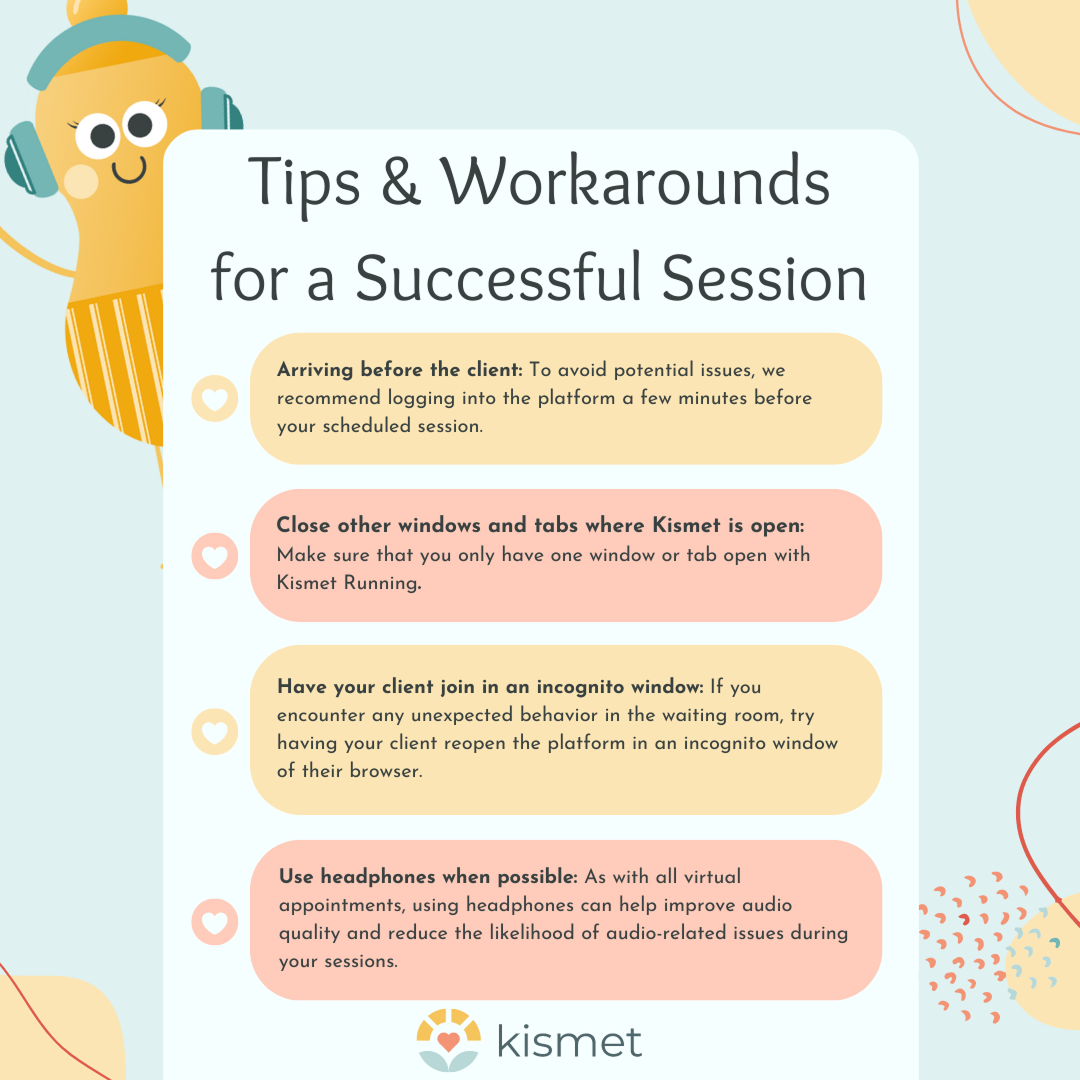
Examples of this include illustrating brand characters and email flyers.
Ensured accessible, inclusive design across the platform, enabling more users to successfully navigate and adopt key features.
Collaborated with engineering and product partners to make the platform fully responsive, improving usability and engagement across devices.
Developed a reusable design system that maintained brand integrity and accelerated new feature development.
Telehealth requires interfaces that supported emotional safety and clarity. I learned to prioritize calm visual language, reduced cognitive load, and predictable interaction patterns.
Building a responsive scalable component library taught me how to maintain consistency across multiple product surfaces while still allowing for flexibility and growth.
Designing for diverse clinician and patient needs reinforced accessibility as an integral part of product quality, not a layer added at the end.
Kismet Health is a telehealth platform focused on strengthening communication and collaboration between clinicians and patients. During my time there, I worked across multiple product surfaces including the clinician dashboard, patient waiting room, video calling experience, AI-based support tools, and collaborative whiteboard-style interaction tools.
I owned end-to-end UX and UI design across several core product experiences, helping the platform move from early MVP functionality to a more scalable, accessible, and market-ready solution.
My work included:
I created a scalable, accessibility-first design system and mobile-responsive experience that boosted engagement and streamlined feature development.
I focused on two persona types: the Client (Caiden) and the Provider (Dr. Jane).
The design system included brand guidelines, reusable layouts, accessibility guides, and a custom-made component library.
Through early research it was determined most of the "Client" users would be on their phone and that the platform needed to be responsive on the client's side.
There were multiple occasions of in-person and remote interviews and surveys with prospective users about their current experiences with telehealth platforms. I also conducted A/B testing with those who fit our client persona (kids) for branding preferences.
Examples of this include illustrating brand characters and email flyers.
Ensured accessible, inclusive design across the platform, enabling more users to successfully navigate and adopt key features.
Collaborated with engineering and product partners to make the platform fully responsive, improving usability and engagement across devices.
Developed a reusable design system that maintained brand integrity and accelerated new feature development.
Telehealth requires interfaces that supported emotional safety and clarity. I learned to prioritize calm visual language, reduced cognitive load, and predictable interaction patterns.
Building a responsive scalable component library taught me how to maintain consistency across multiple product surfaces while still allowing for flexibility and growth.
Designing for diverse clinician and patient needs reinforced accessibility as an integral part of product quality, not a layer added at the end.
Kismet Health is a telehealth platform focused on strengthening communication and collaboration between clinicians and patients. During my time there, I worked across multiple product surfaces including the clinician dashboard, patient waiting room, video calling experience, AI-based support tools, and collaborative whiteboard-style interaction tools.
I owned end-to-end UX and UI design across several core product experiences, helping the platform move from early MVP functionality to a more scalable, accessible, and market-ready solution.
My work included:
I created a scalable, accessibility-first design system and mobile-responsive experience that boosted engagement and streamlined feature development.
I focused on two persona types: the Client (Caiden) and the Provider (Dr. Jane).
The design system included brand guidelines, reusable layouts, accessibility guides, and a custom-made component library.
Through early research it was determined most of the "Client" users would be on their phone and that the platform needed to be responsive on the client's side.
There were multiple occasions of in-person and remote interviews and surveys with prospective users about their current experiences with telehealth platforms. I also conducted A/B testing with those who fit our client persona (kids) for branding preferences.
Examples of this include illustrating brand characters and email flyers.
Ensured accessible, inclusive design across the platform, enabling more users to successfully navigate and adopt key features.
Collaborated with engineering and product partners to make the platform fully responsive, improving usability and engagement across devices.
Developed a reusable design system that maintained brand integrity and accelerated new feature development.
Telehealth requires interfaces that supported emotional safety and clarity. I learned to prioritize calm visual language, reduced cognitive load, and predictable interaction patterns.
Building a responsive scalable component library taught me how to maintain consistency across multiple product surfaces while still allowing for flexibility and growth.
Designing for diverse clinician and patient needs reinforced accessibility as an integral part of product quality, not a layer added at the end.
Kismet Health is a telehealth platform focused on strengthening communication and collaboration between clinicians and patients. During my time there, I worked across multiple product surfaces including the clinician dashboard, patient waiting room, video calling experience, AI-based support tools, and collaborative whiteboard-style interaction tools.
I owned end-to-end UX and UI design across several core product experiences, helping the platform move from early MVP functionality to a more scalable, accessible, and market-ready solution.
My work included:
I created a scalable, accessibility-first design system and mobile-responsive experience that boosted engagement and streamlined feature development.
I focused on two persona types: the Client (Caiden) and the Provider (Dr. Jane).
The design system included brand guidelines, reusable layouts, accessibility guides, and a custom-made component library.
Through early research it was determined most of the "Client" users would be on their phone and that the platform needed to be responsive on the client's side.
There were multiple occasions of in-person and remote interviews and surveys with prospective users about their current experiences with telehealth platforms. I also conducted A/B testing with those who fit our client persona (kids) for branding preferences.
Examples of this include illustrating brand characters and email flyers.
Ensured accessible, inclusive design across the platform, enabling more users to successfully navigate and adopt key features.
Collaborated with engineering and product partners to make the platform fully responsive, improving usability and engagement across devices.
Developed a reusable design system that maintained brand integrity and accelerated new feature development.
Telehealth requires interfaces that supported emotional safety and clarity. I learned to prioritize calm visual language, reduced cognitive load, and predictable interaction patterns.
Building a responsive scalable component library taught me how to maintain consistency across multiple product surfaces while still allowing for flexibility and growth.
Designing for diverse clinician and patient needs reinforced accessibility as an integral part of product quality, not a layer added at the end.
